You Won’t Believe What’s Hiding in Uyuni’s Salt Flats
When I first arrived in Uyuni, Bolivia, I expected the mirror-like salt flats—but not the surreal architecture rising from the white expanse. Forgotten train cemeteries, eco-lodges made of salt blocks, and colonial ruins blended into the desert skyline. This remote town holds secrets most travelers miss. What I discovered wasn’t just landscape, but human ingenuity shaped by extreme environment. Let me take you beyond the photo spots to the real architectural soul of Uyuni.
The Ghostly Train Cemetery: A Rusty Relic of Boom Times
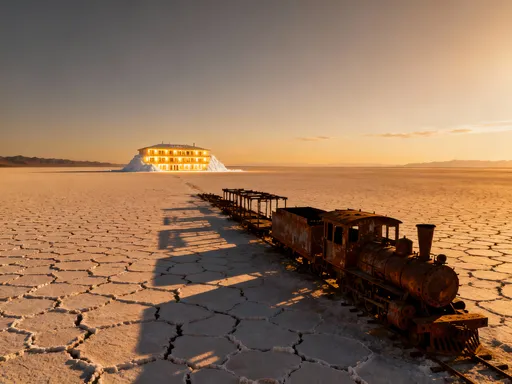
Nestled on the arid outskirts of Uyuni lies a haunting monument to industrial ambition—the Train Cemetery, where rusted locomotives from the 19th century stand frozen in time. These iron giants once powered Bolivia’s silver and mineral trade, hauling ore from the highland mines of Potosí to Pacific ports through a network funded by British investors. When global demand waned and railways became obsolete, the trains were abandoned, left to succumb to the relentless Andean sun and saline winds. Today, their skeletal frames rise like ancient fossils against a pale sky, their boilers cracked and wheels half-buried in the dust.
What makes this site so compelling is not just its visual drama, but the story it tells of economic rise and fall. The railway system was once a symbol of modernization and foreign investment, connecting isolated communities to global markets. Yet as mining profits declined and infrastructure aged, entire industries collapsed, leaving behind relics like these. The cemetery now functions as an open-air museum, drawing thousands of visitors each year. Local guides recount tales of engineers who braved freezing altitudes and thin air to keep the trains running, offering a human dimension to the rust and decay.
While some view the site as a tourist spectacle, others see it as a solemn reminder of environmental and economic costs. The iron from Europe could not withstand the harsh conditions of the Altiplano, and today, preservation efforts are minimal. Visitors are encouraged to observe rather than climb on the fragile structures, as continued foot traffic accelerates deterioration. Nonetheless, the Train Cemetery remains one of Uyuni’s most photographed landmarks, not because it is beautiful in a traditional sense, but because it evokes a powerful sense of history—of dreams forged in steel and abandoned to the silence of the salt desert.
Salt Hotels: Sleeping on (and in) the World’s Largest Salt Flat
One of the most remarkable adaptations to Uyuni’s extreme environment is the rise of hotels constructed entirely from salt. These unique lodgings, built from compacted salt blocks harvested directly from the Salar de Uyuni, offer travelers an immersive experience unlike any other. From exterior walls to interior furniture—even beds and tables—much of the structure is composed of crystallized salt. Walking into one feels like stepping into a mineral cathedral, where light refracts softly off pale, textured surfaces and the air carries a faint, clean crispness.
The development of salt hotels emerged in the 1990s as local communities sought sustainable ways to benefit from tourism without damaging the fragile ecosystem. Traditional building materials like wood and concrete are scarce and expensive to transport to this remote region, making salt an ideal, locally sourced alternative. Each block is hand-cut from the salar’s crust, dried, and stacked with a binding agent made from a mixture of saltwater and natural adhesives. The resulting structures are surprisingly durable, with insulating properties that help regulate indoor temperatures despite sub-zero nights and scorching daytime heat.
Living in a salt hotel presents both wonder and challenges. Humidity from cooking and breathing can cause surfaces to soften over time, requiring regular maintenance and reapplication of protective sealants. Some hotels now use hybrid designs, incorporating wood or stone supports for structural stability while preserving the aesthetic of salt walls. Guest experiences vary—from basic eco-lodges with shared facilities to more developed accommodations offering hot water and solar-heated rooms—yet all emphasize sustainability and cultural authenticity.
These buildings are more than novelties; they represent a form of architectural innovation born of necessity. By turning a natural resource into habitable space, the people of Uyuni demonstrate how design can respond intelligently to environmental constraints. For visitors, staying in a salt hotel is not just about novelty—it’s about participating in a tradition of adaptation, where shelter is carved from the very ground beneath your feet.
Colonia Potosí: Urban Remnants in a Remote Frontier
Just beyond the modern center of Uyuni lies Colonia Potosí, a quiet neighborhood that whispers echoes of a bustling past. Established during the height of Bolivia’s mining boom, this district was once home to engineers, administrators, and laborers who kept the rail and mining operations running. Its architecture reflects a blend of Spanish colonial influence and Andean practicality, with low-rise brick homes, adobe-walled compounds, and small churches built to withstand the region’s extreme climate. Though many buildings now stand in various states of disrepair, their thick walls and inward-facing layouts speak to a deliberate approach to urban living at over 3,600 meters above sea level.
The design of Colonia Potosí reveals how urban planning adapted to isolation and altitude. Narrow, winding streets were intentionally laid out to reduce wind exposure, while compact housing clusters conserved heat during freezing nights. Windows are small and strategically placed to minimize drafts, and roofs are constructed with heavy tiles or layered thatch to provide insulation. Even the orientation of homes often follows solar patterns, maximizing sunlight during short winter days. These subtle but effective choices illustrate a deep understanding of environmental conditions long before modern engineering principles were formalized.
Today, the neighborhood is sparsely populated, with only a fraction of its original residents remaining. Some homes have been restored by descendants of original families, while others serve as informal museums or community centers. Local initiatives aim to preserve the area’s heritage, recognizing that Colonia Potosí is not just a relic of the past, but a living archive of high-altitude urban design. Walking through its quiet lanes, one can almost hear the footsteps of miners returning from shifts, the clatter of horse-drawn carts, and the murmured prayers from the old chapel at dusk.
Preservation efforts face challenges, including limited funding and the slow erosion caused by wind and salt-laden air. However, there is growing interest in integrating Colonia Potosí into cultural tourism routes, offering guided walks that highlight both architectural features and personal stories. This shift could provide economic opportunities while safeguarding the neighborhood’s identity. In a world increasingly dominated by standardized construction, Colonia Potosí stands as a testament to place-based design—where buildings grow not from blueprints, but from the land and lives they shelter.
Modern Adaptations: How Architecture Responds to Extreme Conditions
In recent years, new construction in Uyuni has embraced a fusion of traditional knowledge and modern engineering to meet the demands of one of Earth’s most unforgiving climates. The town experiences intense solar radiation during the day, temperatures that can plummet below freezing at night, and winds strong enough to erode unprotected surfaces. Architects and builders now prioritize resilience, energy efficiency, and environmental harmony, resulting in structures that are both functional and contextually grounded.
One key innovation is the use of passive solar design. Buildings are oriented to capture maximum sunlight during winter months, with large south-facing windows allowing heat to penetrate interior spaces. Thermal mass materials—such as adobe, stone, and even salt—are used in walls and floors to absorb warmth during the day and release it slowly at night. In some newer community centers and schools, double-glazed windows and insulated roofing systems help maintain stable indoor climates without relying on fossil fuels.
Local materials continue to play a central role. Beyond salt, builders utilize volcanic rock, clay, and recycled metals to reduce transportation costs and environmental impact. Roofs are often sloped to prevent salt accumulation and designed with overhangs to protect walls from rain and wind. In certain eco-lodges, green roofs planted with native grasses provide additional insulation and help blend structures into the natural landscape.
Perhaps most importantly, contemporary architecture in Uyuni reflects a growing awareness of sustainability. Solar panels are now common, powering lighting, heating, and water systems in both public and private buildings. Rainwater harvesting systems, though limited by the region’s aridity, are being tested in experimental housing projects. These modern adaptations do not reject tradition; instead, they build upon it, refining age-old techniques with new tools and insights. The result is a built environment that honors the past while preparing for an uncertain future shaped by climate change and increasing tourism.
Sacred Structures: Indigenous Influence on Built Forms
Scattered across the high plains surrounding the Salar de Uyuni are simple yet profound structures rooted in the traditions of the Aymara and Quechua peoples. These indigenous communities have inhabited the Altiplano for centuries, developing architectural forms that reflect not only environmental adaptation but spiritual beliefs. Rural shelters, ceremonial platforms, and family compounds often follow circular or semi-circular layouts, a design choice that differs sharply from the rectilinear plans introduced during colonial times.
The circle holds deep symbolic meaning, representing continuity, unity, and the cyclical nature of life and seasons. Homes known as chozas or ujllus are typically constructed from stone, adobe, and thatch, with domed or conical roofs that shed wind and snow efficiently. Their entrances are often aligned with astronomical events—such as the winter solstice—demonstrating a sophisticated understanding of celestial patterns. Some ceremonial sites include stone altars or niches facing sacred mountains, or apu, believed to be spiritual guardians of the land.
These structures are not merely functional; they are expressions of cosmology. The placement of doors, the height of walls, and even the type of stones used are often determined by ritual significance as much as practicality. For example, certain rocks may be selected for their perceived energetic properties, while construction is timed according to agricultural or spiritual calendars. This integration of belief and building underscores a worldview in which humans are not separate from nature, but deeply embedded within it.
Though modernization has influenced construction methods, many families continue to build using ancestral techniques, passing knowledge from generation to generation. In recent years, cultural preservation programs have supported the documentation and revitalization of indigenous architecture, recognizing its value not only as heritage but as a model of sustainable living. For visitors, encountering these sacred forms offers a rare opportunity to witness architecture as a living practice—one shaped by memory, meaning, and reverence for the earth.
From Mines to Museums: Repurposing Industrial Spaces
As mining activity in the Uyuni region has declined, a quiet transformation has taken place—abandoned mines and processing facilities are being reimagined as cultural spaces. Once silent and derelict, these industrial sites now host art exhibitions, historical displays, and community events, breathing new life into structures once dedicated solely to extraction. This adaptive reuse movement reflects a broader shift in the local economy, where culture and tourism are becoming as important as minerals.
One notable example is the conversion of an old ore warehouse into a regional museum showcasing geological samples, mining tools, and photographs of early 20th-century life in Uyuni. Interpretive panels, many created in collaboration with local elders, provide context about the social and environmental impacts of mining. In another project, a decommissioned smelting plant has been transformed into an open-air gallery, where metal sculptures made from reclaimed train parts stand as both art and commentary on industrial legacy.
These transformations are not just aesthetic—they serve practical and educational purposes. By preserving original infrastructure, such as rail lines, loading docks, and ventilation shafts, these sites maintain a tangible connection to the past. School groups visit regularly, learning about Bolivia’s mineral wealth and the lives of those who worked to extract it. At the same time, artists and curators use the raw, industrial atmosphere to create immersive experiences that challenge visitors to reflect on progress, loss, and renewal.
The success of these projects depends on community involvement and sustainable funding. Some are supported by municipal programs, while others rely on partnerships with national cultural institutions. Entrance fees are typically low or donation-based, ensuring accessibility for local residents. Importantly, these repurposed spaces do not romanticize the mining era; instead, they present a balanced narrative that acknowledges both technological achievement and human hardship. In doing so, they transform relics of exploitation into platforms for dialogue, memory, and creativity.
Travel Tips: Navigating Uyuni’s Architectural Gems Responsibly
For those planning to explore Uyuni’s architectural wonders, timing and preparation are essential. The best period to visit is during the dry season, from May to November, when roads are passable and skies are clear. During the wet season (December to April), portions of the salar flood, creating the famous mirror effect but making access to remote sites difficult or impossible. Travelers should book tours in advance, ideally with locally owned operators who prioritize environmental stewardship and fair wages for guides and drivers.
Packing appropriately is crucial. Temperatures can vary by more than 30 degrees Celsius between day and night, so layered clothing is recommended. Sun protection—including hats, sunglasses, and high-SPF sunscreen—is vital due to the intense UV radiation at high altitude. A reusable water bottle, altitude sickness medication, and a basic first-aid kit should also be included. For visits to salt hotels, bringing a sleeping bag liner is advisable, as bedding may be basic despite improvements in comfort.
Responsible tourism means respecting both natural and cultural sites. Visitors should avoid touching or removing salt from structures, as even small actions can accelerate erosion. When photographing homes or communities, always ask permission, especially in indigenous areas. Staying on marked paths helps protect fragile ground, and carrying out all waste ensures the landscape remains pristine for future generations.
Finally, take time to engage meaningfully with the places you visit. Speak with local guides, support community-run cafes and shops, and listen to stories that bring the architecture to life. These interactions enrich the travel experience and contribute directly to the well-being of Uyuni’s residents. By traveling with curiosity and care, you become part of a more sustainable future—one where heritage is not just preserved, but honored and sustained.
Uyuni’s architecture isn’t just about buildings—it’s a story of survival, creativity, and adaptation written in salt, stone, and rust. Beyond the iconic reflections lies a deeper narrative shaped by people who’ve lived on the edge of the world. By exploring these structures, we don’t just see Bolivia’s past—we glimpse how humans build meaning into extreme landscapes. Next time you plan a trip, ask not only where to go, but what the land has taught those who built upon it.