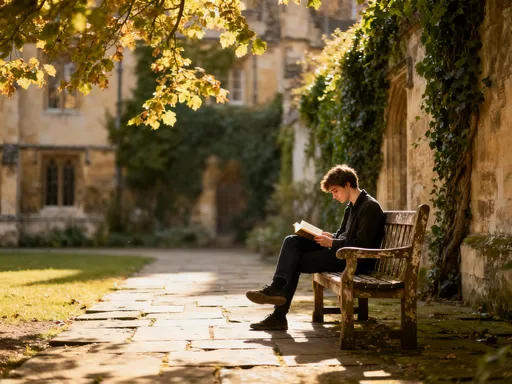
You Won’t Believe These Hidden Public Spaces in Cambridge
When you think of Cambridge, grand colleges and the River Cam probably come to mind—but there’s a quieter, more local side to this historic city. Beyond the tourist trails, I discovered peaceful public spaces where students read under trees, artists sketch in corners, and locals sip tea in hidden courtyards. These spots aren’t in guidebooks, yet they capture the soul of Cambridge. Let me take you through the city’s best-kept secrets—places that made me fall in love with Cambridge all over again.
Rethinking Cambridge: More Than Just Tourist Postcards
Cambridge is often celebrated for its iconic skyline of spires and domes, its centuries-old university colleges, and the leisurely glide of punts along the River Cam. These sights are undeniably beautiful, and for good reason—they are central to the city’s identity. Yet, when visitors limit themselves to these well-trodden paths, they miss a deeper, more intimate layer of Cambridge life. The city’s true rhythm isn’t only in its postcard-perfect views but in the quiet corners where daily life unfolds away from cameras and tour groups.
Stepping off the main routes reveals a different Cambridge—one shaped by students walking to early lectures, families picnicking on sun-dappled grass, and elderly residents reading newspapers on weathered benches. These moments happen in overlooked public spaces that are open to everyone, yet often unseen by those following the standard itinerary. Exploring these areas doesn’t require special access or insider knowledge; it simply asks for a shift in perspective. Instead of chasing landmarks, travelers are invited to embrace stillness, observe local customs, and appreciate the subtle beauty of ordinary places.
What makes these spaces so meaningful is their authenticity. Unlike curated attractions, they are not designed for visitors. They exist for the people who live here, serving as breathing rooms in an otherwise busy academic town. When you enter one of these quiet zones, you’re not just observing Cambridge—you’re experiencing it. This kind of travel fosters connection, not just documentation. It invites mindfulness, encouraging visitors to slow down, listen, and notice details they might otherwise overlook. In a world where tourism often prioritizes speed and visibility, these hidden spots offer a refreshing alternative: the joy of discovery without spectacle.
The Hidden Courtyards of Historic Colleges: Open to All, Yet Rarely Noticed
Many of Cambridge’s oldest colleges are enclosed within high walls, giving the impression of exclusivity. But tucked within or just beyond their main gates are small courtyards and green spaces that are quietly accessible to the public. These semi-private areas are rarely mentioned in travel guides, yet they offer some of the most serene moments in the city. Unlike the grand courts swarming with tour groups, these lesser-known spots maintain a sense of calm, where the only sounds are rustling leaves and distant footsteps on gravel paths.
One such example is the rear courtyard near St John’s College, accessible through a narrow passage off All Saints Passage. Though technically part of the college grounds, this area is open during daylight hours and frequented by students seeking quiet study spots. The space is modest—just a patch of lawn surrounded by ivy-covered stone walls and shaded by a large chestnut tree—but its tranquility is profound. Another overlooked gem lies behind Sidney Sussex College, where a small garden with wooden benches offers a secluded retreat. These spaces were originally designed as contemplative zones for scholars, and they still serve that purpose today.
What makes these courtyards special is their duality: they are both part of the university’s heritage and open to the public without charge. No tickets, no queues, no restrictions—just a simple invitation to pause. Visitors who enter do so quietly, often removing their hats or lowering their voices out of respect. There’s an unspoken etiquette here, a shared understanding that these places are not for performance but for presence. For a moment, anyone can become part of the university’s living atmosphere, even if only as a silent observer.
These courtyards also reflect Cambridge’s layered history. Some date back to the 16th century, originally built as cloistered gardens for monks or scholars. Over time, as the university evolved, so did the use of these spaces—but their essence remained. Today, they serve as green lungs in the urban core, offering shade in summer and stillness in winter. They remind us that even in a place steeped in tradition, openness and accessibility can coexist. For travelers, finding one of these courtyards feels like uncovering a secret—one that doesn’t diminish in value because it’s shared, but grows richer with each quiet visitor.
Parks Beyond the Backs: Local Favorites Off the Tourist Radar
While the Backs—the stretch of parkland behind several colleges along the River Cam—draw crowds with its postcard views, other green spaces in Cambridge offer a more relaxed, community-centered experience. Places like Jesus Green, Midsummer Common, and Sheep’s Green are beloved by locals but often overlooked by tourists. These parks don’t feature in glossy brochures, yet they are where Cambridge’s everyday life unfolds in full color. They are spaces of play, rest, and connection, where the pace slows and the atmosphere softens.
Jesus Green, located just north of the city center, is a wide-open space popular with families and young adults. On sunny afternoons, children fly kites near the lido, while couples stretch out on blankets with books and thermoses. A tree-lined path runs along the riverbank, offering views of rowers practicing in the early morning. Unlike the manicured lawns of the Backs, Jesus Green has a wilder, more democratic feel. Benches are scattered without symmetry, and the grass is worn in patches from frequent use. This isn’t a garden meant to impress—it’s a park meant to be lived in.
Midsummer Common, adjacent to Parker’s Piece, is another local favorite. Historically used for fairs and public gatherings, it still hosts seasonal events, from outdoor markets to community festivals. But on ordinary days, it’s a place of gentle activity: dog walkers looping around the perimeter, joggers weaving through footpaths, and elderly residents feeding ducks by the water’s edge. The grass slopes gently toward the river, creating natural seating for those who want to watch the world go by. In spring, daffodils bloom in clusters, and in autumn, the trees shed golden leaves onto the footpaths.
Further south, Sheep’s Green offers an even quieter experience. Connected to Coe Fen, this area feels more like countryside than city park. A network of unpaved trails winds through tall reeds and wildflowers, leading to secluded benches overlooking the water. Birdwatchers often visit to spot kingfishers or herons, while cyclists use the adjacent path as a quiet alternative to busy streets. Because it’s slightly removed from the center, foot traffic is light, making it ideal for those seeking solitude. These parks may lack the architectural grandeur of the Backs, but they possess something more valuable: a sense of belonging. They are not curated for visitors—they are lived in by residents, and that authenticity is what makes them special.
The City’s Quiet Squares: Where Locals Gather Without the Crowds
Cambridge’s town squares are often bustling during market hours, but visit them at quieter times, and a different atmosphere emerges. Places like Market Square outside peak hours, Little St Mary’s Lane, and the area around the Guildhall transform when the crowds thin. What was once a hub of commerce becomes a space of calm, where the rhythm of daily life is easier to hear. These squares may seem ordinary at first glance, but they hold subtle charms for those willing to linger.
Market Square, best known for its vibrant Saturday market, takes on a peaceful quality in the early morning or late evening. Stalls are packed away, and the stone pavement glows softly under lamplight. A few benches line the edges, often occupied by solitary figures—students reviewing notes, elderly couples sharing sandwiches, or travelers catching their breath. The absence of noise allows other details to emerge: the chime of the nearby church clock, the scent of fresh bread lingering from the morning bakery, the way sunlight filters between buildings at golden hour. These moments reveal the square not as a transactional space, but as a communal one.
Little St Mary’s Lane, just off Trumpington Street, is even more understated. It opens into a small, irregularly shaped plaza bordered by low stone walls and shaded by plane trees. There are no monuments or fountains here, just a few benches and a sense of quiet dignity. Students from nearby colleges often pass through on their way to lectures, pausing briefly to tie a shoelace or check a phone. On slow afternoons, a street musician might play a gentle melody on guitar, the sound drifting across the cobbles. It’s not a place designed for tourism, but for living—a pause between destinations.
The Guildhall area, near the river and slightly removed from the main shopping streets, offers another example of understated charm. The building itself is historic, but the surrounding space is unassuming: a mix of paved ground and greenery, with benches tucked into sheltered corners. Locals gather here during lunch breaks, reading newspapers or chatting in low voices. In the evenings, the area is softly lit, creating a warm ambiance without drawing crowds. These squares may not appear in photo albums, but they are integral to the city’s daily life. They remind us that public spaces don’t need grandeur to be meaningful—they only need to be present, consistent, and open.
Library Lawns and University Gardens: Public Access, Private Feel
One of Cambridge’s quietest pleasures is the presence of university-affiliated green spaces that welcome the public without fanfare. The lawn in front of the University Library, for instance, is a broad expanse of grass bordered by tall trees and stone pathways. Though surrounded by academic buildings, it is freely accessible and often used by students for reading or napping between classes. The atmosphere is hushed, as if the weight of knowledge inside the library extends outward, encouraging quiet reflection.
Similarly, the Botanic Garden offers more than its main entrance suggests. While the central pathways attract visitors, the lesser-known northern and eastern edges are quieter, with winding trails and secluded seating areas. These zones are less manicured, allowing native plants and seasonal wildflowers to thrive. Birdsong is common, and on weekday mornings, you’re more likely to encounter a botanist taking notes than a tour group. The garden’s design balances structure and spontaneity, offering both formal borders and untamed corners.
Access to these spaces is generally unrestricted during daylight hours, though visitors are expected to follow simple etiquette: keeping voices low, staying on paths where required, and avoiding large gatherings without permission. There’s no need to be a student or staff member—just a respectful presence. This openness reflects a broader philosophy in Cambridge: that knowledge and beauty should not be locked behind gates. These gardens and lawns are not just for scholars; they are shared resources, part of the city’s cultural fabric.
Visiting them requires no special planning, just a willingness to move slowly and observe. A bench beneath a maple tree, a patch of sunlight on the grass, the sound of pages turning in a nearby book—these small moments accumulate into a deeper experience of the city. They offer a rare combination: the elegance of a private estate with the inclusivity of public space. For travelers seeking respite from busier attractions, these areas provide a sanctuary that feels both refined and welcoming.
Canals and Riverside Paths: A Slower Way to See Cambridge
While the central stretch of the River Cam is famous for punting, quieter waterways offer a more contemplative way to experience the city. The canal path near Fen Ditton and the riverside trail along Grantchester Road lead away from tourist hotspots and into greener, more secluded territory. These routes are favored by locals for walking, cycling, and birdwatching, offering long views of meadows, reeds, and sky. The pace here is slower, the air fresher, and the sounds of the city fade into the distance.
The path from Jesus Green toward Midsummer Common follows the river with minimal interruption. Benches appear at irregular intervals, placed to catch the sun or frame a particular view—a heron standing still in the shallows, a family of ducks paddling under a willow. In spring, bluebells bloom along the banks, and in summer, dragonflies dart above the water. The surface of the path varies—some sections are paved, others gravel or packed earth—so comfortable footwear is recommended. But the slight unevenness adds to the sense of adventure, as if you’re discovering a forgotten route.
Further south, the trail toward Grantchester Meadows becomes even more rural. This is where the city begins to blend into the countryside, and the river widens into gentle curves. Cyclists share the path with walkers, moving at a respectful pace. Along the way, small wooden bridges cross side channels, and hidden benches appear beneath trees, offering places to rest. It’s not uncommon to see a student with a sketchpad or a photographer adjusting a tripod, capturing the light as it shifts across the water.
For those continuing toward Grantchester, the full walk takes about an hour, but even a short stretch offers solitude and beauty. Early mornings are ideal, when mist rises from the river and the only sounds are birdsong and distant church bells. These paths don’t lead to a single destination—they are the destination. They invite a different kind of travel, one defined not by ticking off sights but by being present in the moment. In a city known for its intellectual energy, these quiet routes offer balance: a chance to move, breathe, and think without distraction.
Why These Spaces Matter: The Value of Quiet in a Busy World
In an age of constant connectivity and sensory overload, the hidden public spaces of Cambridge offer something increasingly rare: stillness. They are not designed for Instagram or viral fame. They do not compete for attention. Instead, they exist as pockets of calm in a world that rarely pauses. Their value lies not in grandeur but in their ability to restore balance—to remind us that peace is not found only in remote mountains or distant islands, but sometimes just off the main street, behind a quiet gate, or along an unpaved path.
These spaces contribute to well-being in tangible ways. Studies have shown that access to green and quiet areas reduces stress, improves concentration, and supports mental health. In a university town where academic pressure is high, such places are not luxuries—they are necessities. But their benefit extends beyond students. Families, elderly residents, and visitors alike gain from the opportunity to slow down, breathe deeply, and reconnect with themselves and their surroundings.
They also reflect thoughtful urban design. Cambridge has managed to preserve these spaces not through grand gestures, but through quiet consistency—maintaining access, protecting green zones, and respecting the rhythm of daily life. This approach offers a model for other cities: that growth and tradition can coexist, and that public spaces should serve people, not just aesthetics. When a bench is placed where sunlight falls at midday, or a path winds to follow the curve of a river, it shows care—a recognition that small details shape human experience.
For travelers, visiting these spaces transforms the nature of exploration. It shifts the focus from accumulation—how many sights can I see?—to immersion—how deeply can I feel this place? True discovery isn’t always loud or dramatic. Sometimes, it’s the sound of a page turning in a quiet courtyard, the sight of daffodils pushing through soil in early spring, or the warmth of sun on stone after a cold morning. These moments don’t announce themselves. They wait to be noticed.
Cambridge’s magic isn’t confined to its famous colleges or river views. It lives in the spaces between—the courtyards, parks, squares, and paths that welcome without fanfare. They remind us that the best journeys are not always the ones with the most destinations, but the ones that allow us to be fully present. To find peace in plain sight. To walk slowly, look closely, and listen. In the end, the city doesn’t just show us its history—it teaches us how to be still within it.