Wandering Through Papeete’s Hidden Corners: A Local’s Pulse in Every District
You know that feeling when a city surprises you? Papeete, Tahiti, isn’t just a transit stop—it’s alive. I wandered its districts with no map, just curiosity, and found vibrant markets, quiet backstreets humming with culture, and ocean-kissed promenades. Each neighborhood tells a story, blending Polynesian soul with French ease. This isn’t textbook tourism; it’s real, raw, and rich with moments most travelers miss. Let me take you through the heartbeat of Papeete—one unplanned turn at a time.
First Impressions: Beyond the Airport Haze
Many visitors touch down at Faa’a International Airport and immediately look past Papeete, eyes fixed on the postcard islands like Bora Bora or Moorea. But in doing so, they overlook the capital’s quiet magnetism. As you leave the airport and enter the city, the first breath of warm, floral air carries a hint of salt and diesel—a reminder that Papeete is both a working port and a living community. The rhythm here is not hurried like a global metropolis, but neither is it slow in the way many imagine island life to be. It pulses steadily, like a heart tuned to its own beat.
Driving into the city, you’ll notice bursts of color—homes painted in coral pink, sky blue, and sunflower yellow, their wooden shutters thrown open to catch the breeze. Music spills from passing cars, often reggae or Tahitian pop, a genre rich with island pride and poetic storytelling. Street vendors wave from roadside stands selling coconuts and fresh-baked bread. The scent of frangipani drifts through open car windows, mingling with the occasional whiff of grilled fish from a backyard barbecue. These are not curated experiences; they are the unfiltered moments of daily life.
Skipping Papeete is like opening a novel and skipping the first chapter. You may still understand the plot, but you’ll miss the nuances—the character development, the setting, the emotional groundwork. Papeete sets the stage for all of French Polynesia. It’s where cultures converge: Polynesian traditions meet French administrative elegance, and Pacific Island warmth greets global influences. To bypass it is to arrive in Tahiti without context. The city offers a grounding, an invitation to slow down and observe before heading to the resorts and overwater bungalows.
There’s a myth that Papeete lacks charm because it doesn’t have pristine beaches or luxury resorts within city limits. But charm isn’t always found in postcard views. It’s in the way a woman adjusts her flowered dress as she walks to church on Sunday morning. It’s in the laughter of children playing in a courtyard while elders sip tea under a tamanu tree. Papeete’s beauty is woven into its humanity, not just its landscape. Once you see it that way, the city reveals itself not as a stopover, but as a destination with depth.
The Heartbeat of Place: Marché de Papeete
If Papeete has a soul, it lives in the Marché de Papeete. Open daily but busiest in the early morning, this bustling market is more than a place to buy food—it’s the island’s living room. Locals gather here not just to shop, but to connect, to share news, and to celebrate the richness of island life. The moment you step inside, your senses ignite. The air is thick with the sweetness of ripe mangoes, the tang of fresh lime, and the earthy aroma of taro root. Vendors call out in Tahitian and French, their voices rising above the hum of conversation and the occasional burst of laughter.
Rows of wooden stalls overflow with tropical abundance. Pineapples stand in golden pyramids. Breadfruit, green and heavy, rests beside bundles of ti leaves used in traditional cooking. Bright red and orange sea urchins glisten on beds of ice, a delicacy for those who know how to open them. Fishermen arrive with the morning catch—tuna, mahi-mahi, and reef fish—displayed with pride on crushed ice. Watching them clean and fillet the fish with practiced hands is a lesson in respect for the ocean, a value deeply embedded in Polynesian culture.
But the market isn’t just about food. Artisans sell handmade crafts that reflect generations of skill. Woven hats, baskets, and mats made from pandanus leaves are not tourist trinkets—they are functional, beautiful, and often made by hand in family homes. Monoi oil, infused with tiare flowers, is sold in recycled bottles, its golden liquid promising hydration and a touch of island fragrance. These are souvenirs with stories, not mass-produced imports. When you buy from a vendor here, you’re not just purchasing an object—you’re supporting a way of life.
And the vendors remember your face. On the second or third visit, they’ll greet you by name, ask how your family is, or recommend a new fruit to try. This kind of connection doesn’t come from a guided tour. It comes from presence, from returning, from showing interest. One woman, Madame Tere, sells hand-painted fans and taught me the Tahitian word for “thank you”—mahalo—then laughed as I stumbled through the pronunciation. “Again,” she said, smiling. “You’ll get it.” That moment—simple, unscripted—was more meaningful than any five-star experience.
Vaihinia to Vairao: Coastal Streets with Soul
Leaving the market, I walked west along the coastal road, where the urban texture of Papeete gradually softens into something more rural and reflective. The stretch from Vaihinia to Vairao is not marked by grand attractions, but by the quiet poetry of everyday life. Concrete houses with corrugated metal roofs sit beside lush banana groves. Children kick a football near a roundabout, their shouts echoing under the midday sun. A rooster struts across the road, unbothered by passing cars. There’s no performance here—just life unfolding at its natural pace.
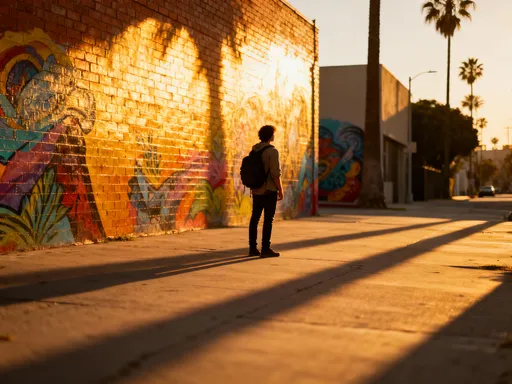
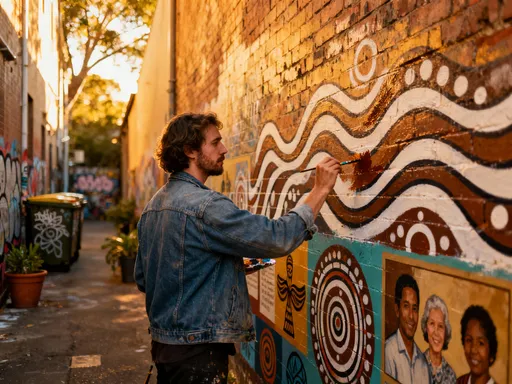
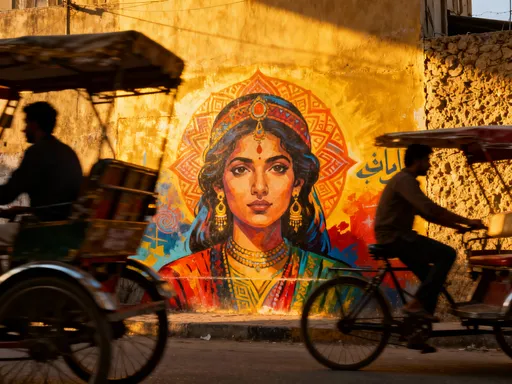
The street art along this route is unexpected and revealing. On breeze-block walls, murals depict Polynesian legends, ocean voyages, and family scenes. One painting shows a voyaging canoe under a starry sky, a tribute to the ancestral navigators who once sailed these waters without instruments. Another portrays a woman weaving a basket, her hands in motion, surrounded by flowers. These are not commissioned works for tourists; they are expressions of identity, painted by local youth who want their stories seen. The colors are bright, the lines bold, and the messages clear: this is our home, and we are proud of it.
In Vairao, the road bends inland, and the pace slows further. A small community center hosts dance rehearsals in the evenings, where young people learn traditional 'ōte'a and 'aparima. On weekends, families gather under mango trees for picnics, spreading out mats and sharing meals of poisson cru and roasted pork. The church bell rings on Sunday morning, a signal for worship and for the slow unfurling of the day. There’s a rhythm here that resists hurry, a way of living that values presence over productivity.
Walking this stretch, I realized how much of travel is about contrast. We often seek the spectacular—the waterfall, the luxury resort, the panoramic view. But sometimes, the most lasting impressions come from the ordinary: a man repairing his fishing net on a porch, a girl riding her bike with a loaf of bread in the basket, an old dog napping in the shade of a breadfruit tree. These moments don’t demand attention, but they offer something deeper: authenticity. And in a world where so much feels staged, authenticity is a rare gift.
Downtown Pulse: Rue du Petit Paris & Colonial Echoes
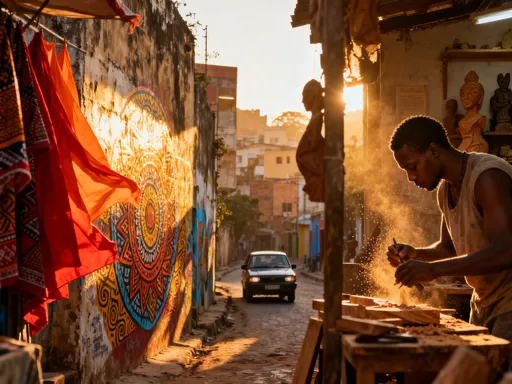
In the heart of Papeete, Rue du Petit Paris offers a fascinating blend of cultures. Despite its name, this narrow street is not a replica of Paris—it’s something more interesting. Here, French and Polynesian influences coexist in harmony. A café with white linen tables serves strong espresso and buttery croissants, while just next door, a tiki carver chips away at a piece of miro wood, shaping a figure that will one day stand in a home or garden. The scent of coffee mingles with the earthy aroma of freshly cut wood, a sensory metaphor for the city itself.
The architecture along this stretch tells a layered story. Colonial-era buildings with wide verandas and louvered shutters stand beside modern government offices and banks. Many of the older structures have been preserved, their pastel facades a reminder of French Polynesia’s complex history. Yet these buildings are not frozen in time. They house post offices, small businesses, and family-run shops. A pharmacy sells both prescription medicine and natural remedies made from island plants. A bakery displays pain au chocolat next to po’e, a traditional Tahitian dessert made from mashed banana and coconut milk, baked in an oven until golden.
This is where locals gather—not for spectacle, but for life. At the post office, people line up patiently, chatting as they wait. A group of women laugh over a shared joke while buying stamps. Outside a small bank, an elder man plays a ukulele, his fingers moving easily over the strings, singing a song in Tahitian. No one crowds around him, but heads nod in recognition. His music is part of the background, like the sound of the waves or the rustle of palm leaves. It belongs.
Downtown Papeete is not polished. The sidewalks are uneven in places. Some buildings show signs of age. But there’s a dignity in its imperfection. This is not a city trying to be something it’s not. It doesn’t cater to Instagram moments or luxury travelers. It simply is. And in that honesty, there is beauty. To walk these streets is to witness the quiet pride of a people who have preserved their language, their customs, and their way of life, even as the world changes around them.
Turi’s Trail: Following Culture Through Neighborhoods
Culture in Papeete isn’t confined to museums or festivals—it’s lived, daily, in the neighborhoods. One way to trace it is what locals sometimes call “Turi’s Trail,” named after a beloved community elder who once walked these streets teaching children about tradition. Following this informal path means looking beyond the obvious, noticing the small signs of cultural continuity. A flower lei hanging on a front door. A family gathered under a tree for a birthday meal. A group of teenagers practicing dance steps in a schoolyard after class.
Traditional dance schools, or fare reo, are anchors in many districts. These are not performance-only spaces; they are community centers where language, music, and history are taught. On any given evening, you might hear the beat of pahu drums or the high, clear voices of children singing in Tahitian. Parents watch from the sidelines, some swaying to the rhythm, others recording on their phones. These moments are not for tourists, but if you pass by quietly, with respect, you’re not turned away. There’s an openness here, a willingness to share—but only if you approach with humility.
Another marker is the use of space. Homes often have open-air living areas, where families eat, talk, and rest. On weekends, you’ll see long tables set up in yards, covered with food for celebrations. The concept of privacy is different here—community comes first. A neighbor will stop by without announcing, bring a plate of food, and stay for an hour of conversation. This isn’t unusual; it’s normal. And it reflects a value system that prioritizes relationships over schedules.
As a visitor, the key is to observe without intruding. Don’t take photos during family gatherings. Don’t interrupt a dance rehearsal. If you’re curious, ask politely. Many people are happy to explain their customs if approached with respect. One woman, when I admired her woven fan, invited me into her home to see how she made them. “It takes time,” she said, her hands moving slowly over the pandanus strips. “But time is what we have.” That moment of connection—offered freely, without expectation—was a gift I carry with me.
Sunset Walks: The Waterfront That Connects It All
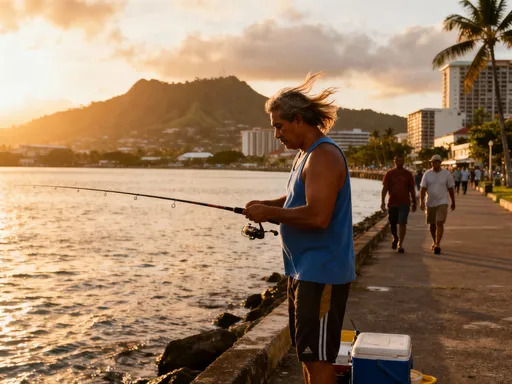
As the sun begins to lower, the waterfront promenade becomes Papeete’s communal backyard. This simple path, stretching along the edge of the harbor, is where the city comes together. Fishermen cast their lines from the seawall, their rods propped on rusted metal stands. Couples stroll hand in hand, speaking softly. Teenagers splash in the shallow waves, laughing as the tide pulls at their feet. The sky turns shades of apricot and lavender, reflecting on the calm water like a painting.
There are no grand monuments here, no ticketed attractions. Just a concrete walkway, a few benches, and the ever-present sound of the ocean. And yet, this is where Papeete feels most itself. You can sit on a bench and watch the day end, listening to the rhythm of the waves and the distant hum of the city. A vendor walks by with a cart of grilled corn and coconut water. A group of men play cards under a palm tree. A child runs to show her father a small crab she’s found in a tide pool.
What makes this place special is its accessibility. Everyone is welcome. Locals don’t come here to see something—they come to be. There’s no pressure to perform, no need to look a certain way. A woman in a floral dress sits with her feet in the water, her eyes closed, face turned to the breeze. A man reads a newspaper, his shoes off, toes in the sand. These are not staged moments; they are real life. And in their simplicity, they are profound.
The promenade also serves as a reminder of Papeete’s relationship with the sea. This is a port city, after all—a place of arrival and departure, of trade and connection. The harbor is busy during the day, with cargo ships and fishing boats coming and going. But at sunset, the activity slows, and the water becomes a mirror. It’s a moment of stillness in a world that rarely pauses. To walk here at dusk is to feel the city’s pulse, steady and calm, like a heartbeat.
Wandering with Purpose: How to Move Through the City Like a Local
So how do you experience Papeete like this? Not by rushing, not by checking off attractions, but by wandering with purpose. That means slowing down, paying attention, and letting the city reveal itself in its own time. Start early, when the markets are fresh and the air is cool. Walk without a map—yes, get slightly lost. Some of the best discoveries happen when you turn down a side street with no name, only the sound of music or the smell of baking bread to guide you.
Learn a few words in Tahitian. A simple “iaorana” (hello) or “mahalo” (thank you) goes a long way. Smiles are universal, but a greeting in the local language shows respect. Don’t be afraid to make eye contact, to nod, to say hello to someone sweeping their porch or sitting on a step. Most people will respond warmly. And if you’re invited into a home or offered food, consider it an honor. These gestures are not casual—they are expressions of arosa, the Tahitian value of love and hospitality.
Timing matters. Visit the market in the morning. Walk the waterfront at sunset. Avoid midday, when the sun is strongest and many locals are indoors. Carry water, wear a hat, and move at a gentle pace. This isn’t a city for marathons—it’s for meandering. Trust your feet more than your phone. GPS can’t tell you when to stop and listen to a child singing, or when to pause and watch an old man carving a wooden fish. Those moments are off the map, but they are the heart of the journey.
And finally, let go of the need to document everything. Not every moment needs a photo. Some memories are meant to live in your mind, not on a screen. When you stop trying to capture the experience and simply allow yourself to be in it, Papeete opens up. You begin to notice the small things—the way light falls on a painted wall, the sound of a language you don’t understand but feel in your bones, the warmth of a shared smile. These are the threads that weave the fabric of true connection.
Papeete isn’t about grand landmarks or polished attractions. It’s in the unguarded smiles, the scent of grilled fish on a side street, the way each district breathes at its own pace. Wandering here isn’t just travel—it’s connection. When you let go of the itinerary and listen to the city’s pulse, Tahiti’s capital reveals its soul. And that’s a journey worth every unplanned step.