You Won’t Believe These Hidden Photo Spots in Sana’a
Walking through Sana’a feels like stepping into a living museum—centuries-old tower houses rise like sandstone sentinels, their stained-glass qamariyas glowing in the morning light. I came for the culture, but stayed for the shots—each alley a frame-worthy moment. From bustling souks to quiet courtyard mosques, Sana’a’s cultural venues offer some of the most authentic, untouched photo opportunities in the Middle East. This is travel photography at its rawest and most real. The city does not perform for cameras; it simply exists, dignified and enduring, allowing those who move with patience and respect to witness its layered beauty. In a world where many destinations have been shaped by tourism, Sana’a remains refreshingly uncurated—its charm rooted not in spectacle but in daily life, tradition, and architectural harmony.
The Heartbeat of Old Sana’a – A Photographer’s First Look
Sana’a’s Old City, a UNESCO World Heritage Site, is one of the most visually arresting urban landscapes in the Arab world. With over 6,000 traditional multi-story tower houses dating back more than 1,000 years, the district forms a labyrinth of narrow alleys and vertical architecture that rewards careful observation and deliberate framing. These homes, built from rammed earth and limestone, rise up to eight stories high, their facades adorned with geometric patterns and rows of projecting wooden balconies known as mashrabiyas. What makes this area especially compelling for photographers is the way light interacts with texture—early morning sun casts long shadows across the honey-colored stone, highlighting every crack, carving, and weathered surface.
The architectural density creates natural leading lines and layered compositions, ideal for wide-angle lenses. Photographers can capture depth by positioning subjects—such as a lone figure ascending a staircase or a draped doorway—at various levels within the frame. Meanwhile, portrait photographers find rich backdrops in the intricate stonework and contrasting textures of plaster and wood. The use of natural materials means no two walls look alike, offering endless variation in tone and detail. Because the city has evolved organically over centuries rather than being reconstructed for tourism, its authenticity translates directly into visual storytelling power.
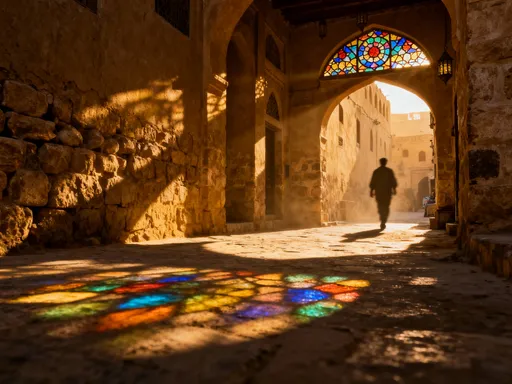
One of the most distinctive features of these homes is the qamariya, a stained-glass window typically placed above doorways or in upper rooms. These circular or arched windows, crafted from colored glass set in geometric gypsum frames, filter sunlight into kaleidoscopic patterns on interior floors and walls. Capturing these effects requires timing—ideally during mid-morning when the sun strikes at an angle that projects vibrant shapes indoors. Tripods are often necessary due to low interior light, but even handheld shots can yield stunning results when paired with higher ISO settings and image stabilization.
Despite regional challenges, the Old City remains remarkably intact, thanks to longstanding preservation efforts and traditional building techniques passed down through generations. Its survival as one of the best-preserved historic centers in the Islamic world is a testament to cultural resilience. For photographers, this continuity means access to scenes that feel timeless—children playing in courtyards, merchants arranging goods on wooden stalls, and elders sipping tea on rooftop terraces—all unfolding within a setting that has changed little in appearance for centuries. This authenticity, however, comes with responsibility: images should honor the context, avoiding sensationalism or distortion of daily life.
Great Mosque of Sana’a – Sacred Light and Silent Moments
At the spiritual and geographical heart of the city stands the Great Mosque of Sana’a, believed to be among the oldest mosques in the world. Tradition holds that it was founded during the lifetime of the Prophet Muhammad, making it a site of profound religious significance. While non-Muslims are not permitted to enter the prayer hall, the outer courtyards and surrounding arcades offer ample opportunities for respectful photography. The mosque’s vast rectangular courtyard, paved in stone and shaded by centuries-old trees, provides a tranquil contrast to the energy of the nearby markets. Its simple grandeur—defined by symmetrical arches, sandstone columns, and open sky—lends itself to minimalist compositions that emphasize light, shadow, and geometry.
Photographing religious sites demands both technical precision and cultural awareness. The best light occurs during early morning, when soft golden rays illuminate the eastern façade and cast delicate shadows through the colonnades. This is also the quietest time, before worshippers gather for prayers and street vendors set up nearby. Using a polarizing filter can help manage glare on stone surfaces, while a slightly elevated vantage point—such as a nearby second-floor balcony or a low stool—can reveal the mosque’s full symmetry. Drones are not permitted in the area, both for legal and cultural reasons, so photographers must rely on ground-level perspectives and creative framing.
Ethical considerations are paramount. While exterior shots are generally acceptable, care must be taken not to photograph individuals engaged in prayer or to intrude on private devotional moments. Capturing the mosque’s atmosphere without people can convey serenity, but including worshippers—especially if they are backlit or silhouetted—can add emotional depth. In such cases, it is essential to maintain distance and avoid zooming in on faces without permission. The goal is not to document the sacred for spectacle, but to reflect its dignity and stillness through composition and light.
The Great Mosque also houses one of the oldest known Quranic manuscripts, though this is not accessible to visitors. Nevertheless, the sense of history permeating the site is palpable. Cracked stone steps, weathered calligraphy inscriptions, and ancient wooden doors all speak to centuries of continuous use. Photographers who approach the site with reverence often find their images resonate more deeply—not because of technical perfection, but because they reflect a moment of quiet observation rather than intrusion. This balance between aesthetic pursuit and spiritual respect defines meaningful photography in sacred spaces.
Al-Tawashi Souq – Where Culture and Color Collide
Just steps from the Old City’s main thoroughfares lies Al-Tawashi Souq, one of Sana’a’s oldest and most vibrant market districts. Unlike modern shopping centers, this is a place where commerce unfolds in layers—stacks of turmeric and cumin glow like mounds of gold, bolts of hand-dyed cotton drape over wooden beams, and brass lanterns hang in clusters, catching flickers of candlelight. For photographers, the souq offers a feast of color, texture, and human interaction. Every stall tells a story, from the elderly spice merchant weighing cloves on an antique scale to the young apprentice polishing copper with a cloth. These are not staged scenes; they are moments of real labor and livelihood, unfolding naturally throughout the day.
To capture the essence of Al-Tawashi, photographers must embrace immersion over detachment. The most compelling images often emerge after minutes—or even hours—of observation. Rather than snapping quickly and moving on, spending time at a single stall allows for a deeper understanding of rhythm and routine. A weaver’s hands moving across the loom, the way light falls on a pile of saffron at midday, or the exchange of a knowing smile between neighbors—these subtle gestures convey authenticity far more than wide establishing shots alone. Patience pays off in candid expressions and unguarded moments that reveal the soul of the market.
Lighting in the souq is complex. Narrow passageways create dappled illumination, with shafts of sunlight breaking through gaps in the overhead coverings. This can result in high contrast, requiring careful exposure management. Bracketing shots or using HDR modes can help preserve detail in both shadows and highlights. Because flash disrupts the ambient mood and may offend artisans, natural light and higher ISO settings are preferable. A fast prime lens (f/1.8 or wider) enables sharper images in dim corners, while a moderate telephoto lens (85mm) allows for tighter portraits without crowding the subject.
Equally important is the practice of seeking permission. While some vendors welcome attention, others prefer to work undisturbed. A simple gesture—a nod, a smile, or a few words in Arabic—can open doors to collaboration. When granted, close-up shots of hands at work, tools of the trade, or detailed fabrics become not just visually rich, but ethically grounded. The resulting photographs carry a sense of partnership rather than extraction. In this way, photography becomes a form of cultural exchange, where the image-maker and subject co-create meaning through mutual respect.
Bab al-Yemen – The Gateway That Tells a Thousand Stories
Rising at the southwestern edge of the Old City, Bab al-Yemen (the Gate of Yemen) is one of Sana’a’s most iconic landmarks. More than just an entrance, it is a living monument—a threshold where history and daily life converge. Built in the 7th century and rebuilt in the 14th, its arched stone façade is adorned with intricate Islamic calligraphy and geometric motifs, glowing warmly in the late afternoon sun. The gate once served as the main entry point for pilgrims and traders arriving from southern Yemen, and today it remains a hub of movement: pedestrians, motorbikes, and donkey carts pass beneath its arch, creating a dynamic flow that is endlessly fascinating to observe and photograph.
The visual drama of Bab al-Yemen shifts throughout the day. Midday brings sharp contrasts—deep shadows under the arch, bright sunlight on the surrounding walls—ideal for black-and-white conversions that emphasize form and texture. By late afternoon, the western-facing stone catches the slanting rays of the sun, turning golden and softening its edges. This is the golden hour for photography, when the entire structure seems to radiate warmth. A wide-angle lens captures the full arch and its surroundings, while a longer focal length isolates details such as weathered inscriptions or the silhouette of a passing figure.
Street photographers will find rich narrative potential here. The gate is not merely a backdrop; it is a stage for human activity. Elderly men sit on low benches sharing stories, children dart through the arch on their way home from school, and merchants sell tea and bread from portable stalls. These moments, fleeting and unscripted, are the heart of documentary photography. Anticipating movement—such as a donkey cart emerging from shadow into light—requires attentiveness and readiness. A continuous shooting mode can help capture the decisive moment, while a shallow depth of field draws focus to a single subject within the chaos.
Compositions that include both the architecture and the people enhance storytelling. For example, framing a vendor’s cart in the foreground with the gate rising behind creates depth and context. Shooting from ground level emphasizes scale, while a slightly elevated position—such as a nearby shop entrance—offers a broader perspective. Because the area is busy, photographers should remain aware of their surroundings, keeping equipment secure and movements considerate. As with all public spaces in Sana’a, discretion and humility go further than boldness. The most memorable images from Bab al-Yemen are not those that shout for attention, but those that quietly observe the rhythm of life passing through an ancient portal.
Hidden Courtyards and Private Homes – Gaining Access to Intimate Spaces
Among the rarest and most rewarding photo opportunities in Sana’a are those found within private homes and secluded courtyards. These interiors, often invisible to casual visitors, reveal the true artistry of Yemeni domestic architecture. Through guided cultural visits or personal introductions, photographers may gain entry to homes featuring hand-carved gypsum screens, painted wooden ceilings, and central gardens blooming with jasmine and citrus trees. These spaces, designed for family life and hospitality, are intimate and serene—worlds apart from the bustling streets outside. Capturing them requires not only technical skill but also trust and discretion.
Interior lighting in traditional homes is typically low, relying on natural illumination from qamariyas and courtyard openings. This creates a soft, diffused glow that enhances the warmth of wood and stone but challenges camera sensors. To preserve detail without introducing noise, photographers should use lenses with wide apertures (f/2.0 or lower) and stabilize shots with tripods or monopods where permitted. Shooting in RAW format allows greater flexibility in post-processing, particularly when recovering shadow detail. Because flash is intrusive and often culturally inappropriate indoors, mastering available light is essential.
The compositions possible in these spaces are deeply layered. A single frame might include a carved window frame in the foreground, a sunlit courtyard beyond, and a figure moving through a distant archway—each element adding narrative depth. Reflections in glass or water features, patterns on textiles, and the play of light on ornate ceilings all invite close attention. These details are not merely decorative; they reflect centuries of craftsmanship and cultural values centered on beauty, privacy, and harmony.
Access to such spaces is a privilege, not a right. Many families welcome respectful visitors, especially when accompanied by a local guide or mutual acquaintance. Building rapport—through conversation, shared tea, or expressions of appreciation—often leads to more natural interactions and better photographs. The resulting images feel lived-in and genuine, not staged or performative. In an age where authenticity is increasingly elusive in travel photography, these private moments offer a rare glimpse into a culture that guards its intimacy with care.
Cultural Etiquette Meets Photography – Navigating Respect and Authenticity
Photographing in Sana’a is as much about relationship-building as it is about technique. The city’s residents value dignity, privacy, and hospitality—principles that must inform every photographic decision. Dressing modestly (long sleeves, covered shoulders, and non-revealing clothing) is not only expected but also fosters trust. Women photographers may find greater access in certain settings, particularly when photographing other women in homes or markets, but all visitors should remain mindful of local norms regarding gender interactions and public behavior.
One of the most important practices is knowing when to lower the camera. Some moments—such as a family gathering, a quiet prayer, or a private conversation—are not meant to be recorded. Respecting these boundaries strengthens credibility and opens doors to future opportunities. Conversely, approaching people with kindness, asking permission with a smile, and offering to share printed photos can transform a simple interaction into a meaningful connection. Many Yemenis are curious about photography and appreciate when visitors take time to explain their work.
It is also crucial to avoid portraying Sana’a through a lens of hardship or exoticism. While the country has faced challenges, the city’s enduring beauty, cultural richness, and daily resilience deserve center stage. Images that focus on strength, tradition, and joy—children laughing in alleyways, artisans at work, families sharing meals—present a more balanced and truthful narrative. Authenticity in photography does not mean capturing everything; it means choosing what to show with intention and respect.
Ultimately, the most powerful photographs from Sana’a are those taken after conversation, after tea, after mutual recognition. They are not stolen moments, but gifted ones. This philosophy—that access is earned, not taken—transforms photography from a transaction into a dialogue. When practiced this way, the camera becomes not just a tool for documentation, but a bridge between worlds.
Why Sana’a Stays With You – Beyond the Lens
Leaving Sana’a, one does not simply carry photographs; one carries impressions—of light on stone, the scent of cardamom in the air, the sound of call to prayer echoing between towers. The city imprints itself on memory not because it is easy to photograph, but because it demands presence. It asks the traveler to slow down, to listen, to look with care. In return, it offers scenes of profound beauty and cultural continuity, preserved against the odds. To photograph Sana’a is not just to collect images, but to participate in a story of endurance, artistry, and human connection.
The photographs that last are not those with perfect exposure or composition, but those that capture a moment of shared understanding—a merchant’s smile after permission is granted, a child’s curiosity mirrored in the lens, the quiet pride in a craftsman’s hands. These are the frames that resonate, not because they are dramatic, but because they are real. They remind us that travel photography, at its best, is an act of witness and gratitude.
Sana’a challenges the modern impulse to consume places quickly and move on. It resists being reduced to a checklist of sights. Instead, it invites depth, patience, and humility. For the thoughtful photographer, it offers something increasingly rare: authenticity unshaped by tourism, beauty rooted in daily life, and moments of connection that transcend language. In a world of fleeting images, Sana’a teaches us to see more slowly, to honor what we see, and to share it with care. One frame, one moment, one respectful encounter at a time, it reminds us why we travel—and why we photograph.