This Is Why Salzkammergut’s Landmark Buildings Will Blow Your Mind
You know that feeling when you turn a corner and suddenly, history hits you like a gust of alpine wind? That’s Salzkammergut. Nestled in Austria’s green heart, this region isn’t just about lakes and mountains—its landmark buildings tell stories of emperors, artisans, and centuries-old traditions. I never expected architecture to move me, but here, every stone feels alive. Let me take you through the cultural soul of Austria, one breathtaking structure at a time.
Discovering Salzkammergut: More Than a Postcard
The Salzkammergut region stretches across the Austrian states of Upper Austria, Salzburg, and Styria, a landscape so harmonious in its beauty that it earned UNESCO World Heritage status in 1997. Its designation as a cultural landscape reflects not just pristine lakes and snow-dusted peaks, but a built environment shaped by human hands over millennia. This is not a preserved diorama—it is a living, breathing continuum where 18th-century farmhouses still shelter families and pilgrimage routes remain trod by the faithful. The landmark buildings here do not stand apart from nature; they emerge from it, shaped by the same forces that carved the mountains and filled the lakes.
What sets Salzkammergut apart from other alpine regions is the depth of its architectural storytelling. Each village, church, and villa carries the imprint of economic history, spiritual devotion, and social evolution. The region’s name itself—"Salz" meaning salt and "Kammergut" referring to royal property—reveals its origins as an imperial salt-producing heartland. For over 7,000 years, salt extraction shaped settlement patterns, trade routes, and even burial customs. The wealth generated from this "white gold" funded churches, homes, and public spaces that continue to define the region’s aesthetic and cultural identity.
Travelers often arrive expecting postcard-perfect scenery—and they find it. But those who pause to examine the craftsmanship of a hand-carved balcony or the weathered clapboard of a lakeside home discover a deeper truth: architecture in Salzkammergut is not about grandeur for its own sake. It is about resilience, adaptation, and belonging. These buildings were not designed for tourists; they were built to endure, to serve, and to reflect the values of the people who lived within them. That authenticity is what makes the experience so powerful.
Hallstatt’s Ancient Heart: The Salt Mine and Village Charm
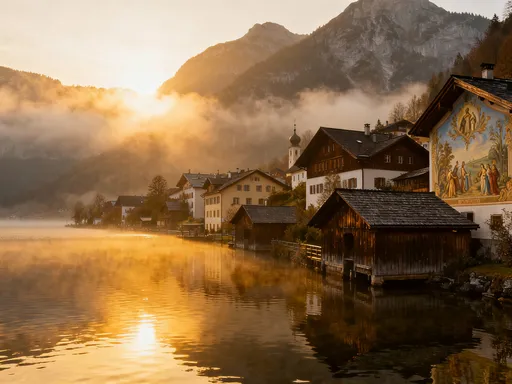
No place in Salzkammergut embodies the fusion of nature, industry, and culture more vividly than Hallstatt. Perched between the steep slopes of the Dachstein Mountains and the glassy surface of Hallstätter See, the village is a marvel of vertical urban planning. Houses cling to the mountainside on wooden stilts, connected by narrow paths and staircases that defy gravity. This is not picturesque chaos—it is centuries of adaptation to a challenging terrain, where space is scarce and every square meter must serve a purpose.
The story of Hallstatt begins deep underground. Archaeological evidence confirms salt mining here as early as 5000 BCE, making it one of the oldest industrial sites in Europe. The salt mines provided not only economic prosperity but also remarkable preservation conditions—so much so that organic materials like leather, textiles, and even human remains have survived for millennia. The nearby Beinhaus, or “Charnel House,” houses over 1,200 painted skulls, each inscribed with the name and dates of the deceased. This tradition, born from limited burial space, is not macabre but deeply personal, a testament to a community that honored its dead with care and continuity.
Walking through Hallstatt today, one feels the weight of time in the texture of its buildings. The white-washed facades with colorful window boxes, the wooden balconies overflowing with geraniums, and the slate roofs angled to shed snow—all speak to a vernacular architecture refined over generations. Even the materials are local: timber from the surrounding forests, stone from the mountains, and lime from processed fossils in the limestone cliffs. The village is not a museum piece; it is a functioning community where fishermen still row traditional wooden boats and families gather on terraces overlooking the lake.
Visitors can descend into the salt mines via a combination of funicular and wooden slides, experiencing firsthand the conditions that shaped Hallstatt’s identity. The tour includes a boat ride across an underground lake, illuminated by soft lights that reflect off the salt walls like stars. This journey underground complements the surface experience, offering a fuller understanding of how the land’s resources shaped both economy and culture. It is a rare opportunity to connect with history not as observers, but as participants.
Gosau’s Alpine Simplicity: Where Tradition Lives in Timber
Just a short drive from Hallstatt, the village of Gosau offers a quieter, more introspective expression of Salzkammergut’s architectural soul. Nestled in a high alpine valley beneath the dramatic Gosaukamm ridge, this hamlet is defined by its traditional wooden farmhouses—robust, functional, and deeply rooted in seasonal rhythms. These homes, some dating back to the 17th century, are not preserved behind glass; they are lived in, maintained, and passed down through generations.
The architecture of Gosau reflects the demands of alpine life. Steeply pitched roofs allow heavy snow to slide off naturally, preventing structural collapse. Thick timber walls provide insulation against freezing winters, while overhanging eaves protect the lower levels from moisture. The wood itself—usually spruce or pine—is sourced locally and treated with natural oils rather than synthetic paints, allowing the buildings to age gracefully into the landscape. Intricate carvings on doorframes and balconies hint at the pride artisans took in their work, transforming necessity into artistry.
What is most striking about Gosau is the sense of self-sufficiency embedded in its structures. Many homes include attached barns, haylofts, and tool sheds, creating self-contained living units that supported year-round survival. In summer, families would move livestock to higher pastures in a practice known as transhumance, living in mountain huts that followed the same architectural principles. These seasonal dwellings, though simpler, were equally well-adapted to their environment, with compact layouts and efficient fireplaces.
Preservation in Gosau is not driven by tourism but by cultural pride. Local cooperatives and heritage groups actively support the use of traditional techniques, such as hand-hewn timber joints and lime-based plasters. Young carpenters apprentice with master builders to learn skills that modern construction has largely abandoned. This continuity ensures that the village does not become a frozen tableau but remains a dynamic expression of alpine life. For visitors, Gosau offers a chance to witness tradition not as performance, but as practice.
St. Wolfgang and the Pilgrimage Church: Faith in Form
If Hallstatt speaks to industry and Gosau to rural life, then St. Wolfgang embodies the spiritual dimension of Salzkammergut’s architecture. At the heart of this lakeside village stands the Pfarrkirche St. Wolfgang, a 15th-century pilgrimage church that draws visitors as much for its artistic treasures as for its religious significance. Built in the late Gothic style, the church is a symphony of stone, wood, and light, where every element serves both aesthetic and devotional purposes.
The church’s most renowned feature is the high altar, carved between 1471 and 1481 by Michael Pacher, one of the greatest sculptors of the South German Renaissance. This masterpiece, over five meters tall, depicts scenes from the life of Christ with astonishing detail and emotional depth. The figures seem to breathe, their robes flowing as if caught in a divine wind. Pacher’s use of perspective and spatial composition was revolutionary for its time, blending Italian Renaissance influences with Germanic craftsmanship. To stand before this altar is to witness faith rendered in wood—solid, enduring, and profoundly moving.
But the impact of the church extends beyond the visual. The acoustics of the stone nave amplify even a whisper, making hymns and chants resonate with otherworldly clarity. This auditory dimension was no accident; it was carefully designed to elevate the worship experience, reinforcing the belief that sacred space could bridge heaven and earth. Pilgrims have traveled to St. Wolfgang for centuries, drawn by the reported miracle of a self-carved wooden statue of the Virgin Mary, said to have been guided by divine hands.
The church’s location—on a gentle rise overlooking Wolfgangsee—adds to its symbolic power. Approaching it from the lake, one sees its onion-domed tower reflected in the water, creating a sense of harmony between built and natural environments. Surrounding the church are well-kept cemeteries with wrought-iron crosses and floral tributes, continuing a tradition of reverence that spans generations. St. Wolfgang is not merely a destination; it is a living sanctuary where architecture, art, and faith converge.
Bad Ischl: Imperial Summers and Elegant Heritage
As the 19th century unfolded, Salzkammergut evolved from a region of miners and farmers into a retreat for Europe’s elite. Nowhere is this transformation more evident than in Bad Ischl, a spa town that became the summer residence of Emperor Franz Joseph I and his wife, Empress Elisabeth. The Kaiservilla, now a museum, offers an intimate glimpse into imperial life, where gilded parlors, private gardens, and handwritten letters reveal a monarchy deeply connected to this alpine haven.
The Kaiservilla was originally a gift to the emperor in 1853, purchased by his mother, Archduchess Sophie, as a wedding present. Over the decades, it was expanded and refined, reflecting both Habsburg taste and local craftsmanship. The interior retains much of its original furnishings—ornate chandeliers, silk wallpapers, and period furniture—while the gardens bloom with roses, hydrangeas, and boxwood hedges arranged in formal patterns. Walking through the villa, one senses the emperor’s attachment to simplicity; his private study is modest, filled with maps, books, and family portraits rather than opulent displays.
Bad Ischl’s architecture reflects this imperial influence. The town center features pastel-colored villas with wrought-iron balconies, bay windows, and decorative cornices—styles that echo the Biedermeier and historicist movements popular across Central Europe. The Kurhaus, a grand neoclassical building, served as the social heart of the spa season, hosting concerts, balls, and political meetings. It was here, in 1914, that Emperor Franz Joseph signed the declaration of war against Serbia—an event that underscores how even remote alpine towns were entwined with broader historical currents.
Yet Bad Ischl never lost its local character. The salt springs that gave the town its name continue to draw visitors seeking therapeutic baths, and the weekly market bustles with regional produce and handmade goods. The coexistence of imperial elegance and everyday life makes Bad Ischl a unique chapter in Salzkammergut’s architectural story—one where grandeur and humility share the same streets.
Architectural Threads: Wood, Water, and Craftsmanship
Across Salzkammergut, certain design elements recur like motifs in a symphony. Clapboard siding, painted in soft whites, grays, and pastels, protects wooden walls from alpine weather. Onion domes crown church towers, their gilded surfaces catching the morning sun. Facades are adorned with frescoes depicting religious scenes, floral patterns, or seasonal motifs—a tradition known as *Lüftlmalerei* that transforms homes into open-air galleries. These details are not arbitrary; they are responses to geography, climate, and cultural identity.
Wood is the defining material of Salzkammergut’s architecture. Abundant in the region’s dense forests, it has been used for everything from structural beams to decorative carvings. Unlike industrial construction, where wood is standardized and mass-produced, here it is treated as a living material—respected, seasoned, and shaped by hand. Traditional joinery techniques, such as mortise-and-tenon joints, allow buildings to flex with temperature changes, enhancing durability. Even roofing materials often come from nature: wooden shingles, slate, or reed that blends into the landscape.
Water, too, plays a shaping role. Lakeside villages like Hallstatt and St. Wolfgang orient their homes toward the water, maximizing light and views while facilitating access for fishing and transport. Canals and drainage systems are integrated into village layouts, preventing flooding during spring thaws. In some areas, houses are built on floating platforms or stilts, adapting to fluctuating water levels—a practice that predates modern engineering by centuries.
Perhaps most remarkable is the continuity of craftsmanship. In an age of prefabrication and digital design, Salzkammergut preserves a culture of handwork that values patience, precision, and pride. Carpenters, stonemasons, and painters pass down their skills through apprenticeships, ensuring that restoration projects remain authentic. This is sustainability in its truest sense—not a trend, but a tradition. When a roof is replaced or a fresco restored, it is done with the same care that guided the original builders.
Traveling with Awareness: How to Experience These Sites Respectfully
As Salzkammergut grows in popularity, so does the responsibility of visitors to engage with the region thoughtfully. Overtourism threatens the tranquility of villages like Hallstatt, where narrow streets were never designed for daily floods of cruise buses. The goal should not be to see as much as possible, but to understand as deeply as possible. This begins with timing: visiting in the shoulder seasons—late spring or early autumn—reduces crowds and allows for more meaningful interactions with locals.
Choosing local guided tours supports community-based tourism and provides access to knowledge that guidebooks cannot offer. A native guide might point out the significance of a carved motif, explain the history of a farmhouse, or share a family recipe passed down through generations. These moments of connection transform sightseeing into storytelling. Similarly, staying in family-run guesthouses or farmstays offers a more authentic experience than large hotels, fostering mutual respect between hosts and travelers.
Mindful photography is another essential practice. While capturing the beauty of a lakeside village is natural, it is important to ask permission before photographing people, especially in private or sacred spaces. The Beinhaus in Hallstatt, for example, requests silence and discretion—a reminder that some places are not attractions, but memorials. Respecting signage, staying on marked paths, and avoiding drone use in protected areas help preserve both the environment and the dignity of local customs.
Slow travel is the most powerful way to honor Salzkammergut’s heritage. Instead of rushing from one landmark to the next, consider spending several days in a single village. Walk the same paths at different times of day. Observe how light changes on a church facade at dawn versus dusk. Chat with a shopkeeper, attend a local festival, or simply sit by the lake and listen. These moments of stillness allow the architecture to speak—not through grand statements, but through quiet presence.
Conclusion: Where Stone Speaks and Time Stands Still
The landmark buildings of Salzkammergut do more than impress; they invite reflection. They remind us that beauty need not be fleeting, that tradition can coexist with progress, and that places can carry memory in their very foundations. These structures were not built for Instagram—though they photograph beautifully—but for living, working, praying, and remembering. Each beam, brick, and fresco tells a story of resilience, community, and deep connection to place.
To travel through Salzkammergut is to step into a different rhythm of time—one measured not in minutes, but in generations. It is to understand that culture is not confined to museums or festivals, but lives in the way homes are built, gardens are tended, and stories are passed down. The region’s architecture is not frozen in the past; it is part of an ongoing conversation between people and landscape, history and present.
So come to Salzkammergut not just to see, but to feel. Let the alpine wind carry the whispers of salt miners, the echoes of hymns, the laughter of families gathered on wooden porches. Let the buildings teach you what books cannot: that belonging is built as much as it is felt, and that some places endure not because they are perfect, but because they are true. In a world of constant change, Salzkammergut stands as a quiet testament to what lasts.