Lost in the Culture of Los Angeles—And Totally Okay With It
Ever wondered what lies beyond the Hollywood sign? I did. What I found wasn’t just fame or palm trees, but a living, breathing cultural mosaic. From underground art galleries to historic neighborhoods pulsing with tradition, Los Angeles surprised me at every turn. This isn’t just a city—it’s a collision of stories, sounds, and flavors waiting to be experienced. Beneath the glitz and glamour often portrayed in film and media is a deeper, richer reality shaped by generations of immigrants, artists, activists, and families who have built communities rooted in resilience and pride. To truly know Los Angeles is to step off the tourist path and into the heart of its neighborhoods, where culture isn’t performed for cameras—it’s lived.
The Soul Behind the Surface: Redefining Los Angeles
Los Angeles is frequently misunderstood. To many, it’s synonymous with celebrity culture, endless freeways, and sun-drenched beaches. Yet reducing this vast and dynamic city to such stereotypes overlooks the profound cultural depth that defines its true character. The essence of Los Angeles isn’t found on red carpets or studio lots, but in the quiet corners of neighborhoods where generations have preserved language, cuisine, music, and art through decades of change. Places like Boyle Heights, Little Tokyo, and Leimert Park are not tourist attractions—they are living communities with histories shaped by migration, resistance, and creativity.
Boyle Heights, for instance, has long been a gateway for Mexican and Central American immigrants. Its streets are lined with family-run bakeries, botánicas, and taquerías that have served the same families for decades. Walking through this neighborhood, one hears Spanish and Spanglish echoing from storefronts, sees children playing fútbol in the park, and feels the warmth of intergenerational connection. Similarly, Little Tokyo stands as one of only three historic Japantowns remaining in the United States, preserving traditions through festivals, tea ceremonies, and community centers that honor the legacy of Japanese Americans, including those unjustly incarcerated during World War II.
Leimert Park, often referred to as the cultural heart of Black Los Angeles, pulses with artistic energy. Home to poets, musicians, and visual artists, it hosts weekly drum circles, jazz performances, and spoken word nights that draw both locals and curious visitors. What makes these neighborhoods special is not their photogenic appeal, but their authenticity—their refusal to be sanitized for outside consumption. Travelers who approach them with respect and openness discover a version of Los Angeles that cannot be captured in postcards, but must be felt through presence and participation.
Art That Speaks: Murals, Galleries, and Street Expression
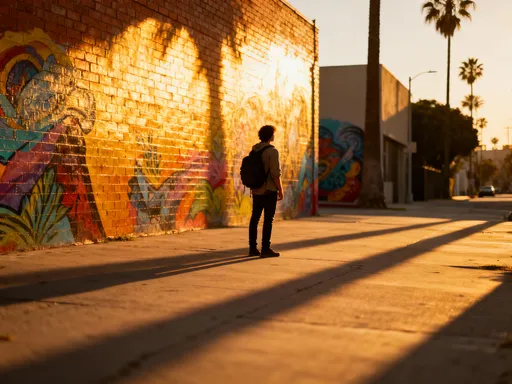
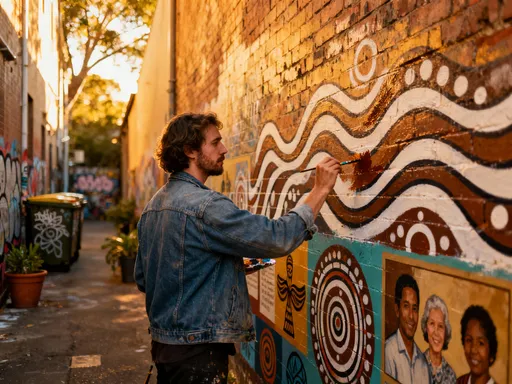
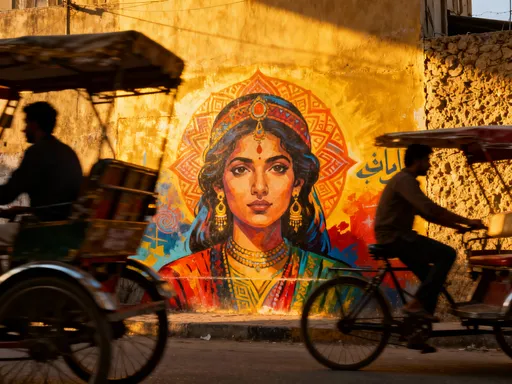
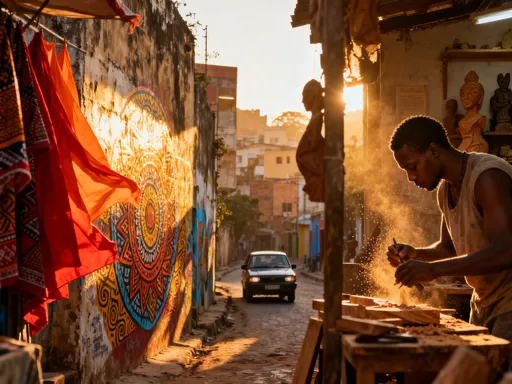
If Los Angeles has a visual language, it is painted on its walls. The city’s streets function as open-air museums, where murals tell stories of struggle, celebration, identity, and resistance. In East Los Angeles, the legacy of the Chicano art movement lives on in vibrant, large-scale works that depict civil rights leaders, indigenous symbolism, and scenes of everyday life. These murals are not mere decorations; they are historical documents, expressions of community pride, and acts of cultural preservation. Places like the historic Estrada Courts housing complex showcase some of the most iconic examples, where every wall carries meaning shaped by decades of activism and artistic collaboration.
Downtown’s Arts District offers a different but equally compelling narrative. Once an industrial zone, it has transformed into a hub for contemporary artists, galleries, and studios. Here, modern installations blend with older graffiti, creating a layered dialogue between past and present. Walking through its alleyways, one encounters bold geometric designs, political statements, and abstract forms that challenge viewers to think beyond surface aesthetics. The district also hosts monthly gallery walks, allowing visitors to meet artists, attend live painting sessions, and gain insight into the creative process behind the work.
Even in quieter neighborhoods like Highland Park or Cypress Park, public art thrives in unexpected places—on the sides of laundromats, above market entrances, and along river pathways. These pieces often reflect local concerns, such as environmental justice, housing rights, or immigrant experiences. For travelers, engaging with this art means more than taking photographs. It means understanding context, respecting the spaces they occupy, and recognizing that many of these works exist because artists felt compelled to speak when words weren’t enough. Best times to visit include weekday mornings or early evenings, when foot traffic is light and lighting is ideal for viewing. When photographing murals, it’s important to avoid blocking sidewalks or disrupting nearby residents. Whenever possible, support local artist collectives or nonprofit organizations that maintain these spaces through donations or volunteer efforts.
Rhythms of the City: Music and Dance in Cultural Hubs
Music in Los Angeles is not background noise—it is the pulse of the city. Every neighborhood has its own sonic signature, shaped by the cultures that call it home. In South Central, jazz remains a vital tradition, carried forward by local legends and emerging talents alike. Intimate clubs and community centers host weekly performances where audiences gather not for spectacle, but for connection. These spaces foster intergenerational exchange, where elders pass down stories through standards and young musicians experiment with new interpretations of classic forms.
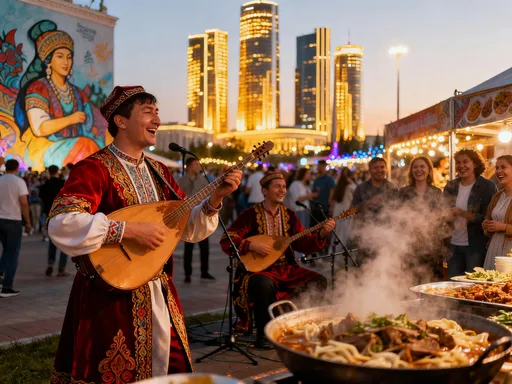
In Plaza México, located in the city’s southeast region, the rhythms of son jarocho—a traditional Afro-Mexican and Indigenous musical style from Veracruz—come alive every weekend. Families gather in the central courtyard, where musicians play the jarana, requinto, and harp while dancers stomp on a wooden platform called a tarima. Participation is encouraged; visitors are often invited to step onto the tarima and learn the basic steps, even if they’ve never danced before. This isn’t performance for profit—it’s celebration as community practice, a way of keeping cultural memory alive through movement and sound.
Other neighborhoods offer their own musical traditions. Koreatown pulses with the energy of K-pop and indie bands performing in small lounges, while Armenian enclaves in the San Fernando Valley maintain choral traditions and folk music passed down through generations. The city also hosts regular open mic nights, particularly in spaces like The World Stage in Leimert Park or Eastside cafes, where poets, singers, and instrumentalists share original work in supportive environments. For travelers, attending these events offers a rare opportunity to witness culture in its most unfiltered form. Rather than watching from a distance, one can clap along, ask questions, or even sign up to perform. The key is approaching with humility and a willingness to listen. These spaces thrive because they are safe for expression, not because they cater to outsiders.
Tastes That Tell Stories: Food as Cultural Memory
To eat in Los Angeles is to travel through time and place. The city’s culinary landscape is one of the most diverse in the world, shaped by waves of immigration that have brought flavors from every corner of the globe. But more than variety, what defines LA’s food culture is its authenticity—its deep connection to family, memory, and survival. A tamale sold at a corner stand in Boyle Heights may be made using a recipe passed down from a grandmother in Oaxaca. A bowl of pho in Thai Town might be the result of a family’s journey from Vietnam, carrying flavors across oceans and decades.
Neighborhoods like Pico-Union offer some of the best pupusas in the country, with small restaurants serving handmade corn masa stuffed with cheese, beans, and loroco, a edible flower native to El Salvador. These eateries are often family-run, operating out of converted houses or strip malls, with minimal signage and no online presence. They rely on word-of-mouth and loyalty from regular customers. Similarly, in Koreatown, traditional dishes like kimchi jjigae and galbi are served in bustling restaurants where elders gather for weekend meals and friends meet after work. The heat of the stone bowls, the clatter of banchan plates, the shared experience of cooking meat at the table—these are not just elements of a meal, but rituals of belonging.
One of the most celebrated aspects of LA’s food scene is its fusion culture, exemplified by the now-iconic Korean taco. Born from the convergence of Korean barbecue and Mexican street food, this dish represents the kind of organic cultural blending that happens naturally in diverse cities. Yet, it’s important to approach such foods with awareness. While fusion can be innovative, it should not erase the origins of the traditions it draws from. Ethical dining means recognizing the roots of what you’re eating, supporting immigrant-owned businesses, and avoiding establishments that commodify culture without giving back to the communities they represent.
Travelers can engage more meaningfully by asking questions, learning how to pronounce menu items correctly, and tipping generously. Seeking out markets like the Grand Central Market or local mercados allows for deeper exploration, where vendors often share stories behind their products. Above all, the goal should be to eat with intention—not as a checklist of trendy dishes, but as a way of honoring the labor, history, and love embedded in every bite.
Festivals Beyond the Spotlight: Seasonal Celebrations You Can Join
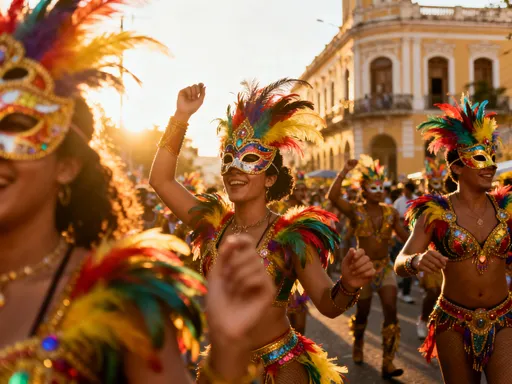
While global events like Coachella dominate headlines, Los Angeles hosts countless smaller, community-based festivals that offer far more intimate and authentic experiences. These gatherings are not designed for mass tourism or media coverage—they exist to celebrate identity, resilience, and continuity. The Nisei Week Festival, held annually in Little Tokyo, honors the legacy of second-generation Japanese Americans. Spanning two weeks, it includes a grand parade, cultural exhibitions, traditional dance performances, and food fairs featuring dishes like okonomiyaki and taiyaki. What makes Nisei Week special is its deep community involvement; many participants are descendants of those who rebuilt Little Tokyo after World War II incarceration.
Similarly, the Pan African Film & Arts Festival, held each February at the Baldwin Hills Crenshaw Plaza, is one of the largest Black film festivals in the United States. It showcases independent films, documentaries, and short works from across the African diaspora, alongside art exhibitions, panel discussions, and youth programs. More than entertainment, it serves as a platform for storytelling, education, and empowerment. Attendees leave not only with new perspectives but with a sense of connection to a global community rooted in shared history and creativity.
One of the most moving events is the annual Día de los Muertos gathering at Evergreen Cemetery, organized by community groups and artists in East LA. Unlike commercialized versions of the holiday, this observance remains deeply spiritual and personal. Families place ofrendas—altars adorned with photos, candles, marigolds, and favorite foods—for loved ones who have passed. Live music, poetry readings, and traditional dances create a space of remembrance and healing. Visitors are welcome, provided they approach with reverence and do not treat the event as a photo opportunity. Participation can include bringing flowers, lighting a candle, or simply observing in silence.
These festivals are not spectacles to be consumed, but invitations to bear witness. They occur at specific times of year, often coordinated with cultural or religious calendars, and rely on volunteer labor and local sponsorship. Travelers who plan around these events gain access to moments of genuine cultural expression, where joy and grief, memory and hope, coexist in balance.
Hidden Archives: Libraries, Museums, and Cultural Centers Off the Beaten Path
Beyond the well-known institutions like LACMA or The Broad, Los Angeles is home to a network of small, community-driven museums and archives that preserve stories often overlooked by mainstream narratives. These spaces offer depth, context, and emotional resonance that larger museums sometimes lack. The Chinese American Museum, located in the historic core of downtown, traces the journey of Chinese immigrants from the 19th century to the present. Exhibits cover topics such as the building of the transcontinental railroad, exclusion laws, and the growth of Chinatown as a center of resilience and mutual aid. Oral histories, family photographs, and artifacts like laundry receipts and hand-sewn garments bring these stories to life in deeply personal ways.
Another powerful institution is the African American Firefighters Museum, housed in a former fire station that was once the only station in LA where Black firefighters were allowed to serve. Its collection includes restored fire engines, uniforms, photographs, and documents that reveal both the discrimination faced by these pioneers and their unwavering commitment to public service. Guided tours, often led by retired firefighters, provide firsthand accounts of what it meant to serve in a segregated department. The museum also runs youth programs aimed at inspiring future generations to pursue careers in emergency services.
Smaller yet equally impactful are family-run initiatives like the Filipino American Library in Historic Filipinotown, which preserves literature, oral histories, and cultural artifacts related to the Filipino diaspora. Similarly, the Self-Help Graphics & Art center in Boyle Heights has served as a hub for Chicano and Latino artists since the 1970s, supporting printmaking, community workshops, and Día de los Muertos programming. These spaces are not just repositories of the past—they are active participants in shaping cultural identity today. Most operate on limited budgets and welcome support through donations, memberships, or volunteer work. Hours vary, and some require advance registration for tours, so planning ahead is essential. But for those willing to seek them out, these institutions offer some of the most meaningful encounters with Los Angeles’ soul.
How to Travel Differently: A Mindset for Meaningful Cultural Exploration
Exploring Los Angeles through its culture requires a shift in mindset—from checking off landmarks to engaging with communities. It means slowing down, listening more than speaking, and consuming less in favor of connecting more. This kind of travel is not about collecting experiences for social media, but about building understanding, empathy, and respect. It begins with research: learning about a neighborhood’s history before visiting, understanding the significance of cultural practices, and recognizing the difference between appreciation and appropriation.
Supporting local economies is another crucial aspect. Choosing to eat at family-owned restaurants, buy from independent artists, or attend community events ensures that tourism dollars benefit those who have built and sustained these cultures. It also means being mindful of space—avoiding loud behavior, respecting private property, and refraining from treating sacred or personal traditions as entertainment. When in doubt, ask permission, observe first, and follow the lead of locals.
Finally, meaningful cultural exploration requires reflection. After visiting a festival, museum, or performance, take time to process what was seen and heard. Consider how one’s own background shapes perception, and remain open to being challenged or changed by the experience. Los Angeles does not offer easy answers or neatly packaged narratives. Instead, it invites conversation—a continuous exchange between visitor and resident, past and present, tradition and innovation.
To be lost in the culture of Los Angeles is not a failure, but a gift. It means stepping into a city that refuses to be simplified, that resists singular definitions, and that thrives on complexity. And in that迷途, there is discovery—not of a destination, but of connection, humanity, and the enduring power of community.