How Ball Sports Gave Me My Calm Back – A Beginner’s Win
Ever feel like your mind won’t shut off? I did—until I picked up a ball and just started playing. As a total newbie, I never expected something as simple as passing or dribbling could rewire my stress levels. Turns out, moving my body in a playful, rhythmic way didn’t just build fitness—it brought real mental clarity. This is how ball sports became my unexpected path to psychological balance. What began as a hesitant step onto a community soccer field transformed into a daily ritual of presence, focus, and emotional release. No medals, no fitness tracker goals—just the quiet joy of movement that slowly untangled years of mental noise.
The Overwhelmed Mind: When Stress Becomes Normal
For many women between 30 and 55, the weight of daily responsibilities can accumulate silently. Juggling family schedules, work deadlines, household tasks, and personal needs often leaves little room for emotional reset. The mind, constantly switching between roles and demands, begins to operate in a state of low-grade alertness. This isn’t acute crisis—it’s the slow burn of chronic mental clutter. Over time, this persistent cognitive load manifests as irritability, difficulty concentrating, restless sleep, and a sense of emotional fatigue that never quite lifts. Many accept this as normal, a necessary trade-off for a productive life. But the body and mind were not designed to function indefinitely in this state of scattered attention and internal pressure.
Psychological imbalance rarely announces itself with dramatic symptoms. Instead, it creeps in through small signs: snapping at a child over a spilled drink, feeling drained after a conversation that should have been light, or lying awake at 2 a.m. replaying a minor work interaction. These moments signal that the nervous system is overtaxed. The brain, starved of downtime, struggles to regulate emotions effectively. What many don’t realize is that mental recovery doesn’t always require therapy, medication, or drastic lifestyle changes. Sometimes, the most effective reset comes not from sitting still, but from moving—specifically, from engaging in physical activities that demand presence and coordination.
Interactive movement, especially the kind that involves tracking motion and responding in real time, has a unique ability to interrupt the cycle of rumination. Unlike passive rest, which can sometimes allow the mind to spiral into overthinking, dynamic physical activity forces attention outward. When the body is engaged in coordinated motion, the brain shifts from a state of internal narration to external awareness. This shift is not just a distraction—it’s a neurological recalibration. The prefrontal cortex, responsible for planning and self-regulation, begins to function more efficiently when supported by rhythmic physical input. For those living with the quiet hum of daily stress, ball sports offer a practical, accessible way to restore mental equilibrium without adding another item to an already full to-do list.
Why Ball Sports? The Unique Mind-Body Connection
Among the many forms of physical activity, ball sports stand out for their ability to create what psychologists call a “flow state”—a condition of deep immersion where time seems to dissolve and self-consciousness fades. This state is not achieved through stillness, but through active engagement with unpredictable, fast-moving stimuli. Whether it’s tracking a tennis ball in flight, anticipating a pass in soccer, or timing a bounce in basketball, the brain is required to process visual information, coordinate motor responses, and adjust in real time. This trifecta of perception, decision-making, and action creates a natural cognitive workout that is both challenging and deeply calming.
The science behind this effect lies in how coordination-heavy movement influences brain chemistry and neural connectivity. Studies have shown that activities requiring hand-eye coordination and spatial awareness activate the cerebellum and prefrontal cortex simultaneously. This dual activation enhances focus, improves emotional regulation, and reduces activity in the default mode network—the brain system associated with mind-wandering and self-referential thoughts. When this network is overactive, it contributes to anxiety and depressive rumination. Ball sports, by demanding sustained attention to external cues, effectively quiet this internal chatter. The result is a mental clarity that feels earned, not forced.
Compared to repetitive workouts like treadmill running or stationary cycling, ball sports introduce an element of unpredictability that keeps the brain engaged in the present moment. While steady-state cardio can be meditative for some, it often allows the mind to drift. In contrast, the dynamic nature of ball play—where every bounce, pass, or return requires split-second adjustment—leaves little room for mental escape. This constant engagement fosters a form of physical mindfulness. The player isn’t trying to clear their mind; they’re simply too busy responding to the game to get lost in thought. Over time, this repeated practice of staying present builds resilience against stress, teaching the brain to respond rather than react to pressure.
Starting From Zero: My First Week as a Total Beginner
The first time I stepped onto a local soccer field for a casual pickup game, my heart pounded more from embarrassment than exertion. I hadn’t played an organized sport since high school gym class, and the thought of running, kicking, and interacting with strangers felt overwhelming. I wore mismatched sneakers and a hoodie, hoping to blend into the background. But within minutes of joining the loosely structured game, something shifted. No one was keeping score. No one cared if I missed a pass. The only rule seemed to be: keep moving, stay involved. And so I did—shuffling, stumbling, occasionally making contact with the ball, laughing when I lost balance. The relief wasn’t in performing well; it was in realizing that performance wasn’t the point.
What surprised me most was how quickly the mental fog lifted. Within 20 minutes of play, the constant loop of to-do lists and unresolved worries that usually occupied my mind had quieted. My attention was fully absorbed by the movement of the ball, the positioning of other players, the rhythm of my own steps. There was no space for overthinking—only action and reaction. The environment helped. These were not competitive athletes, but neighbors, parents, retirees, all drawn to the same need for light activity and social connection. The tone was inclusive, low-pressure, and encouraging. Mistakes were met with smiles, not judgment. This sense of psychological safety made it possible to participate without fear of failure.
By the end of that first week, I had attended three short sessions—two soccer games and one beginner pickleball clinic at the community center. I wasn’t getting faster or more skilled, but I was showing up. And that, I realized, was the real victory. The physical challenge was secondary to the emotional breakthrough: allowing myself to be imperfect, to try something new without expectation. Each session became a small act of self-compassion. I wasn’t training for a tournament; I was relearning how to play, how to move without critique, how to exist in my body without constantly evaluating my worth. That shift—from self-monitoring to self-engagement—was the first step toward lasting calm.
Small Wins, Big Shifts: What Changed in 30 Days
By the fourth week, the changes were no longer subtle. I noticed I was falling asleep faster, without the usual 45-minute ritual of reading and worrying. My sleep felt deeper, more restorative. During the day, I found myself pausing before reacting to minor frustrations—like a delayed grocery order or a missed appointment reminder—instead of immediately feeling irritated. There was a new sense of emotional buffer, as if my responses had gained a fraction of a second of delay, allowing me to choose how to react. Colleagues even commented that I seemed more patient during meetings. I didn’t feel dramatically different, but the cumulative effect of small improvements created a noticeable shift in my overall well-being.
These changes were not coincidental. They were directly linked to the neurochemical effects of dynamic play. Ball sports, especially those involving bursts of movement and coordination, stimulate the release of dopamine, serotonin, and endorphins—neurotransmitters associated with motivation, mood regulation, and natural pain relief. Unlike the short-lived boost from caffeine or sugar, these chemicals produce a sustained sense of well-being. Dopamine, in particular, reinforces the pleasure of achievement, even in tiny increments. Each successful pass, each moment of connection with the game, registered in the brain as a micro-win, reinforcing the desire to continue. Over time, this positive feedback loop made the activity self-sustaining.
Equally important was the social dimension of group play. While I didn’t strike up deep conversations with the other participants, the experience of non-verbal teamwork—anticipating a pass, celebrating a goal with a high-five, adjusting position to support a teammate—built a quiet sense of belonging. This form of connection, free from the pressure of conversation, allowed me to feel part of a group without emotional labor. For women who often carry the weight of managing relationships and communication, this low-demand social engagement was deeply restorative. It wasn’t about talking—it was about moving together, in rhythm, toward a shared, simple goal. That sense of unity, however fleeting, contributed to a growing confidence in my ability to navigate both physical and emotional spaces with greater ease.
The Rhythm of Calm: How Movement Regulates Emotions
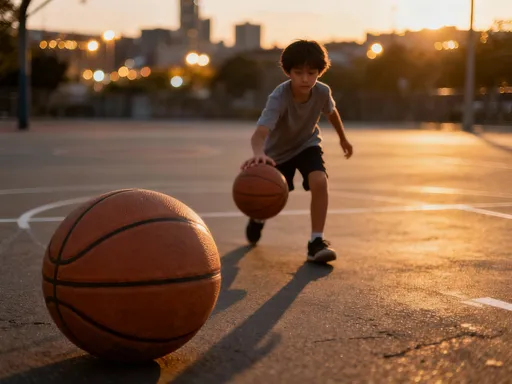
One of the most profound realizations came from observing the repetitive motions inherent in ball sports: the bounce of a basketball, the arc of a thrown ball, the steady tap of a soccer ball against the foot. These rhythmic actions, simple and almost meditative, created a soothing effect on my nervous system. I began to understand that movement itself could be a form of mindfulness. Where traditional meditation asks the mind to sit with stillness, ball play offers a moving alternative—body focused on action, mind naturally anchored in the present. The difference is crucial for those who find seated meditation frustrating or inaccessible. For me, trying to quiet my thoughts while sitting often led to more mental noise. But when my body was engaged in rhythmic, purposeful motion, the mind followed effortlessly.
This concept, sometimes referred to as “physical mindfulness,” leverages the body’s natural ability to regulate emotional states through movement. The repetitive nature of passing, catching, and tracking motion provides a predictable structure that the brain can rely on, even within an unpredictable game. This structure creates a sense of safety and control, which is especially valuable for individuals dealing with anxiety or emotional overwhelm. Each successful interaction with the ball—each clean catch, each accurate throw—reinforces a sense of competence and agency. Over time, this builds what psychologists call “self-efficacy,” the belief in one’s ability to handle challenges. And that belief extends beyond the field.
Perhaps the most valuable lesson was learning to respond rather than react under mild pressure. During a fast-paced game, there’s no time to overanalyze. You must act—quickly, instinctively. This constant practice of making split-second decisions in a low-stakes environment trains the brain to stay calm under stress. The skills developed on the court—focus, adaptability, emotional regulation—begin to transfer to daily life. When a child has a meltdown or a work deadline looms, the instinctive pause, the deep breath, the ability to choose a measured response—these are all echoes of the calm cultivated through play. The ball, in its simple trajectory, becomes a teacher of resilience.
Getting Started Without Pressure: A Realistic Beginner’s Plan
For women approaching ball sports for the first time—or returning after years away—the most important step is to redefine success. It’s not about skill, speed, or fitness level. It’s about showing up, moving, and staying present. A realistic beginner’s plan starts small, with no expectation of immediate mastery. The first phase can be entirely solo: spending 10–15 minutes a day practicing basic motions like throwing and catching a tennis ball against a wall, bouncing a basketball, or using a reaction ball to improve hand-eye coordination. These simple drills build confidence and familiarity without social pressure. They also provide immediate feedback—each successful catch or bounce is a tiny affirmation of progress.
The next step is to explore low-intensity group options. Many communities offer beginner-friendly programs such as recreational pickleball leagues, casual soccer meetups, or community center basketball drop-ins. These environments are typically welcoming to newcomers and emphasize participation over competition. Local parks often host open play sessions with no registration required—just show up with comfortable clothes and water. The key is consistency, not intensity. Two to three sessions per week, lasting 30 minutes each, are sufficient to begin experiencing mental benefits. The goal is not to exhaust oneself, but to establish a sustainable rhythm of engagement.
Choosing the right sport can also make a difference. Pickleball, for example, has gained popularity among adults for its slower pace, smaller court size, and social atmosphere. Basketball offers solo practice opportunities and accessible public courts. Soccer pickup games are often informal and inclusive. The best choice is the one that feels least intimidating and most enjoyable. Equipment needs are minimal: a pair of supportive shoes, comfortable clothing, and a ball—many facilities provide shared equipment. Above all, the focus should remain on the experience of movement, not performance. Progress should be measured by how you feel—calmer, more focused, more present—not by how many points you score.
Beyond Fitness: Building Emotional Balance Through Play
As the weeks turned into months, I began to see ball sports not as exercise, but as emotional maintenance. The joy of play—of laughing at a missed shot, of celebrating a teammate’s goal, of simply feeling the sun on my face while running—became a form of self-care. This kind of joy is not frivolous; it is essential. Playfulness activates the brain’s reward system in a way that structured tasks cannot. It restores a sense of lightness that often gets lost in adult responsibilities. For women who spend so much time caring for others, reclaiming play is an act of psychological reclamation. It says: I matter. My joy matters. My calm matters.
Over time, regular engagement in ball sports builds what can be thought of as mental “muscle memory” for calm. Just as the body learns to move efficiently through repeated practice, the mind learns to return to balance more quickly after stress. This doesn’t mean stress disappears—it means the recovery time shortens. The brain becomes better at recognizing when it’s spiraling and can use movement as a reset button. A five-minute session of bouncing a ball or tossing it against a wall can interrupt a cycle of anxiety as effectively as deep breathing or journaling—for some, even more so, because it engages the body directly.
In the end, ball sports offered more than stress relief. They offered a quiet promise: that taking care of your mind doesn’t always require grand gestures or expensive solutions. Sometimes, it begins with a simple choice—to pick up a ball, step outside, and move. It’s a promise to prioritize presence over productivity, connection over correction, and joy over judgment. For anyone feeling mentally scattered, emotionally drained, or simply disconnected from their body, this path is open. It doesn’t require talent, training, or time. It only requires the willingness to begin. And in that beginning, there is calm.